
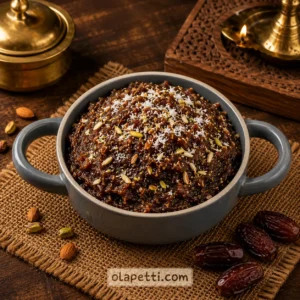
The Story Behind Tirunelveli's Famous Ghee Halwa
If you've ever visited Tirunelveli, you already know the smell before you see the shop - ghee, roasting wheat, and jaggery, all mingling together in the afternoon heat. That smell has been part of this small Tamil Nadu town's identity for well over a century, and it's the reason people travel across states just to carry home a box of halwa.
Where it all began
Tirunelveli Halwa's story is usually traced back to the late 1800s, to a small halwa shop near the town's iconic Nellaiappar Temple. What started as a local sweet made for temple visitors and pilgrims slowly turned into something bigger - a dish so tied to the town that "Tirunelveli" and "halwa" are now practically the same word in most Tamil households.
The original recipe is deceptively simple: wheat, sugar, ghee, and a little edible camphor for that unmistakable aroma. But the process is anything but simple. Getting the wheat starch to that glossy, translucent, jelly-like texture takes hours of continuous stirring over a wood or gas flame, with the ghee added in patient stages. Rush it, and you get a sticky mess. Get it right, and you get that melt-in-the-mouth bite that halwa lovers wait all year for.
Why it's different from other halwas
North Indian halwas are often made from carrot, semolina, or moong dal, and tend to be soft and grainy. Tirunelveli Halwa is in a different league altogether - it's chewy, glossy, and holds its shape when you slice it, almost like a sweet, edible amber. The generous use of ghee gives it richness without making it heavy, and the subtle camphor note is what makes it instantly recognisable to anyone who grew up around it.
Over the years, halwa makers have also experimented with variations - cashewnut halwa, dates halwa, and muscoth halwa (made with milk) have all found their own loyal fans, each keeping the same slow, ghee-rich tradition alive while adding its own twist.
A sweet that means more than sugar
For a lot of Tamil families, Tirunelveli Halwa isn't just dessert - it's tied to memory. It's what your grandmother sent when you moved to a new city. It's what shows up at weddings, on festival mornings, and in gift boxes carried back from a trip home. Ask anyone who grew up in Tamil Nadu and they'll probably tell you about a specific shop, a specific box, a specific person who used to bring it home.
That's really the idea behind Olapetti - bringing that same feeling to your doorstep, no matter where you live now. We work directly with heritage vendors who've been making halwa the traditional way for generations, so what reaches you is as close as possible to the halwa you remember (or the halwa you've heard so much about and have been wanting to try).
If you haven't had authentic Tirunelveli Pure Ghee Halwa before, it's worth experiencing at least once - not just as a sweet, but as a small taste of Tamil Nadu's food history. And if you grew up on it, well, you already know exactly what we're talking about.