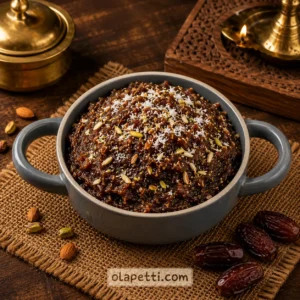
In most Tamil households, you can tell what festival is coming up just by walking into the kitchen. The smell of jaggery melting means Pongal is close. Ghee and camphor in the air usually means halwa season for Diwali.
Every major festival on the Tamil calendar has its own food identity, and honestly, that's often what people look forward to as much as the celebration itself.
Here's a quick tour through the year, festival by festival.
Pongal (January)
The harvest festival, and arguably one of the most food-centric of them all.
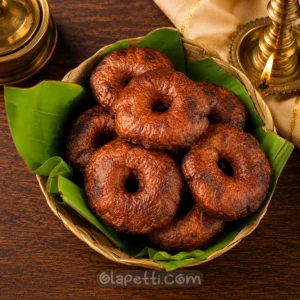
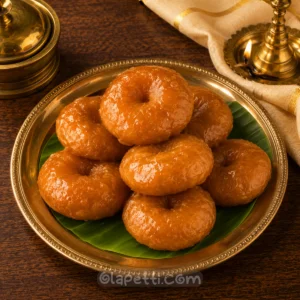
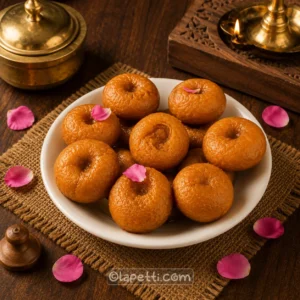
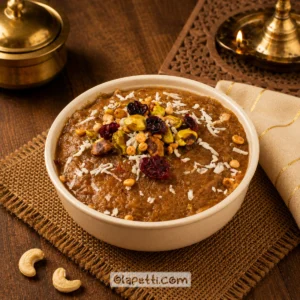
Sakkarai Pongal - rice and moong dal cooked with jaggery, ghee, cashews, and raisins - is the centrepiece, but the table usually extends to Athirasam, Badusha, and a generous spread of murukku and boondhi for the multi-day celebrations that follow, including Bhogi, Mattu Pongal, and Kaanum Pongal.
Tamil New Year / Puthandu (April)
Marked with a specific ritual dish - Mangai Pachadi - a mix of raw mango, jaggery, neem flowers, and chilli meant to represent the different "tastes" of life: sweet, bitter, spicy, and sour.
Alongside this, households often prepare a small sweet spread, with milk-based sweets like Palkova being a popular addition.
Aadi Perukku (July/August)
Celebrated in the Tamil month of Aadi, this festival honours rivers and water bodies, and traditionally involves preparing a variety of dishes at once.
The spread often includes sweet pongal, vadai, and a mix of savoury items, reflecting abundance and gratitude.
Vinayagar Chaturthi (August/September)
The festival most associated with modak and kozhukattai - steamed rice flour dumplings filled with coconut and jaggery, offered to Lord Ganesha.
Some households also prepare a version of sweet appam or additional festive sweets alongside the main kozhukattai offering.
Navaratri (September/October)
Nine nights, and in many homes, a different sweet or savoury prepared each day as part of the "sundal" tradition or as offerings during the evening kolu display.
It's less about one signature dish and more about variety across the nine days.
Diwali (October/November)
The biggest sweet-and-snack festival of the year.
Halwa, Badusha, Athirasam, murukku, and an assortment of savouries all make an appearance, often exchanged between neighbours and relatives as gifts.
It's arguably the one festival where the food itself becomes part of the gifting culture.
Karthigai Deepam (November/December)
Known for lighting rows of lamps, and food-wise, associated with a specific sweet called "Kali" - or Ellu Urundai in some regions - made with sesame and jaggery.
Many households also simplify this with a broader festive sweet spread instead.
A Common Thread
Across nearly every festival, a few ingredients keep showing up - jaggery, ghee, rice, and coconut - each carrying deep symbolic and practical value in Tamil culinary tradition.
What changes from festival to festival is really just how these ingredients are shaped, combined, and offered.
If keeping up with all these festival-specific sweets feels like a lot to prepare from scratch each time, that's exactly the gap Olapetti tries to fill - bringing authentic, traditionally made sweets and snacks to your table for whichever festival is next on the calendar.
Celebrate Every Festival With Traditional Flavours
From Pongal and Diwali to Tamil New Year and Navaratri, explore Olapetti's collection of traditional sweets and savouries made for every festive occasion.
Browse Our Festival-Ready Collection →